

Elderberry Syrup, Rest, and Winter Herbal Care
I genuinely love the month of January. Climate shifts in my little corner of the world seem to have pushed winter back by a month or more. The last few years, December has been mild, wet, brown, and gloomy—an extended fall that kind of bums me out.
Some plant medicines I’ve been loving lately include elderberry (Sambucus nigra) syrup, mixed with hot water as a warming and sweet drink.
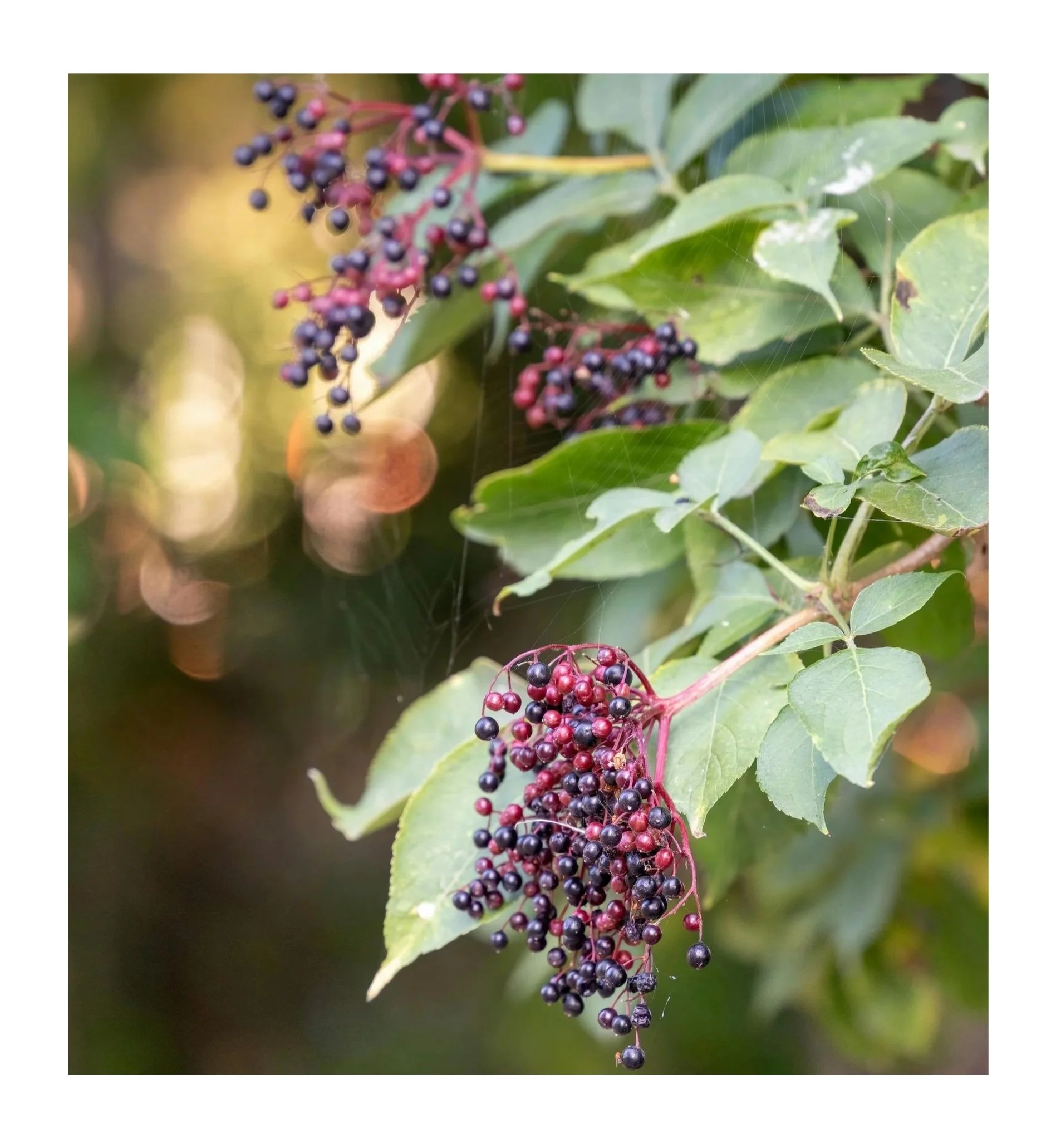
Elderberry syrup has been used for years as a traditional cold and flu remedy, and there has been some research into its use for respiratory viruses.
One randomized trial found that elderberry extracts reduced the severity and duration of common cold symptoms after air travel (Tiralongo et al., 2016).
During the early days of the COVID-19 pandemic, there was concern that elderberry might overstimulate the immune system, potentially contributing to an overproduction of inflammatory cytokines (often referred to as a “cytokine storm”), which in extreme cases can cause organ failure and death (Jarczak et al., 2022). H
owever, follow-up systematic reviews have not found this to be the case (Wieland et al., 2021).
Elderberry is generally considered a safe—and delicious—traditional herbal preparation that may help improve symptoms and reduce the duration of respiratory illnesses.
A Simple Elderberry Syrup Recipe
Ingredients
Approximately 4 cups elderberries (Sambucus nigra), fresh or frozen
Approximately 4 cups water
1 cup honey
2 cinnamon sticks (Cinnamomum verum)
A few slices of fresh ginger root (Zingiber officinale)
Optional: other woody herbs, such as Astragalus membranaceus
Instructions
Add all ingredients except the honey to a stovetop pot. Bring to a gentle boil, then simmer covered for at least 20 minutes. Remove from heat and allow to cool slightly. While still warm, add honey and stir to combine.
Strain and remove the plant material, squeezing well to extract all liquid from the elderberries. Freeze large batches if needed, and store in the fridge for up to three months.
Nourishing Broths & Convalescent Foods
I’ve also been making bone broth using vegetable scraps (onion and garlic skins, carrot tops, celery, and other vegetable ends saved in the freezer) along with rotisserie chicken carcasses or beef bones. An Instant Pot or slow cooker makes this easy, and adding a splash of apple cider vinegar can help break down the bones further.
You can substitute mushrooms for meat if you prefer. Adding this broth to cooked rice, or making congee (an East Asian savory rice porridge), has been an easy and nourishing meal during illness and convalescence.
Rest as Practice
Many years ago, one of my herbal mentors introduced me to the concept of bed rest as a deliberate practice of convalescence, deep rest, and slowing down. She wrote an excellent article on the subject that I still return to often, and I’m looking forward to scheduling my own period of bed rest over the next few weeks.
You can read her piece here:
Winterruhe: Bed Rest, Sleep, Recovery, and the Lost Art of Convalescence
Looking Ahead: Markets, Workshops & Plant Walks
I’m hoping to apply to a few maker’s markets in the coming weeks. I’m also setting up a schedule of workshops and plant walks for the year, thinking about new products for markets, and determining which seedlings to grow and sell. More information coming soon.
Finally, I’m working through my clinical hours and taking practice clients. If you’d like to help me practice my clinical skills and complete my hours, please feel free to get in touch.
I hope you’re able to find some rest this month, and that you’re able to move gently!
Sources
Jarczak, D., & Nierhaus, A. (2022). Cytokine Storm—Definition, Causes, and Implications. International Journal of Molecular Sciences, 23(19), 11740.
https://doi.org/10.3390/ijms231911740
Tiralongo, E., Wee, S., & Lea, R. A. (2016). Elderberry supplementation reduces cold duration and symptoms in air travellers: A randomized, double-blind placebo-controlled clinical trial. Nutrients, 8(4), 182.
https://doi.org/10.3390/nu8040182
Wieland, L. S., et al. (2021). Elderberry for prevention and treatment of viral respiratory illnesses: a systematic review. BMC Complementary Medicine and Therapies, 21(1).
https://doi.org/10.1186/s12906-021-03283-5